Defining Pop Culture: Bettie Page's Rise to Icon Status
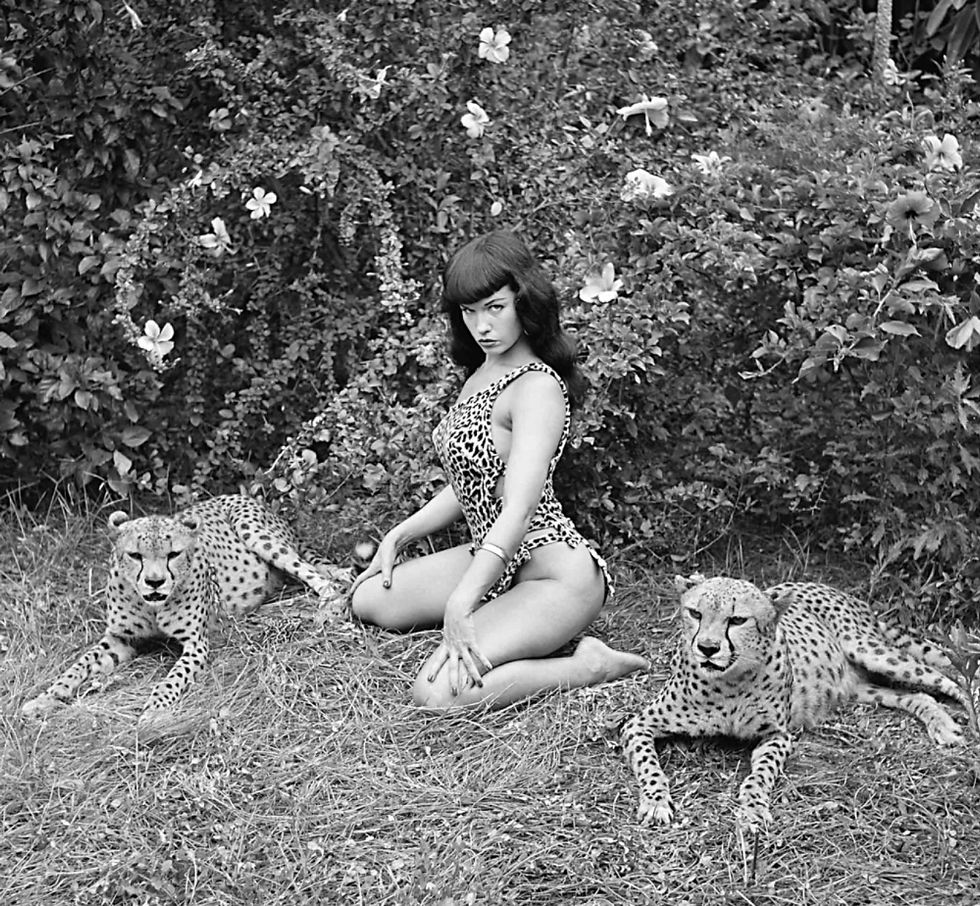
Most people don't know her name — even though they'd instantly recognize her signature look. She was just being herself, and ended up defining a movement, fashion, comics, and film. Even after her death, Bettie Page still defines style in the 21st century.
I'm a huge Bettie Page fan, and I want to see more people recognize the Queen of Pin-ups and her influence. Wikipedia is a bit of a mixed blessing: some of her legend is documented there, but sources get pulled or removed over time, so pieces of her history keep disappearing.
I've made it part of my mission to keep this history alive. I'm grateful to the Internet Archive for indexing some of those sources. My goal is to bring them back to the forefront! Not just on Bettie's Wikipedia page, but in a way that inspires more creativity in today's creators, just as she has since the 1950s.
Look out for more posts in the future as I continue to hunt down stories that connect to Bettie. I plan to use some of the information I found as part of my Superman, Elvis, and Bettie Page defining Pop Culture series. Be on the lookout for what’s next.

Bettie Mae Page (1923–2008) was an American model, widely regarded as one of the most iconic pin-up and glamour models of the 1950s. Known as the "Queen of Pinups," her striking appearance: jet-black hair, piercing blue eyes, and signature blunt bangs made her an enduring pop culture icon.
Much of her early work came through New York's "camera clubs," informal gatherings where amateur and semi-professional photographers paid a small fee to photograph models. A setup that also served as a workaround for the era's strict obscenity laws around commercial nude photography. Thousands of photos from this period survive, though many stayed unpublished or scattered in private collections for decades before resurfacing. Beyond the camera clubs, she also did more taboo bondage and fetish photography, notably with photographer Irving Klaw, which drew Senate scrutiny in the mid-1950s.
At the absolute height of her fame in 1957, Page abruptly abandoned modeling. CMG Worldwide, which handles Bettie's estate, quotes her own explanation: "I wanted to leave New York, and I did so in December of 1957. I was tired of New York, tired of modeling, tired of my life there and wanted to do something else. That's why I quit. No mystery." As modeling faded behind her, her legend only grew, fueled by fan clubs, artists, and collectors keeping her image alive.

About a year later, on New Year's Eve in 1958, she attended a Baptist church service in Key West, Florida, and became a born-again Christian. Dedicated to a new life of spiritual purpose, she enrolled in multiple Bible colleges with the dream of becoming a missionary in Africa. When conservative Christian organizations rejected her application simply because she was a divorced woman, she pivoted her devotion and eventually went to work full-time as a dedicated staff member for Reverend Billy Graham's evangelical crusades.
Tragically, her intense religious devotion eventually became entangled with severe, undiagnosed mental illness rooted in her early life trauma. Page began suffering from violent mood swings, severe depression, and religious delusions, which ultimately led to a diagnosis of paranoid schizophrenia. She spent several years institutionalized in state psychiatric hospitals in California. During these dark decades, she lived in complete obscurity and poverty, completely unaware that the outside world was fiercely speculating about her whereabouts and turning her vintage photos into a massive cult phenomenon.
When Page finally re-emerged into public awareness in the 1990s, she was astounded to discover the "Betty Boom", a massive cultural revival where artists, fashion designers, and modern feminists had reclaimed her as a pioneer of female empowerment and the sexual revolution. Though she famously refused to be photographed in her later years to preserve her youthful image, she finally shared her complex, unapologetic journey in her own words through extensive audio interviews for the documentary Bettie Page Reveals All. She passed away in 2008, remembered not just as a one-dimensional 1950s model, but as a resilient, deeply faithful woman who navigated extraordinary fame, debilitating personal demons, and a remarkable search for peace.
Comments